
A Challenging Large Incisional Hernia After Gallbladder Surgery: Expert Surgical Repair by Dr Vivek Bhaskar
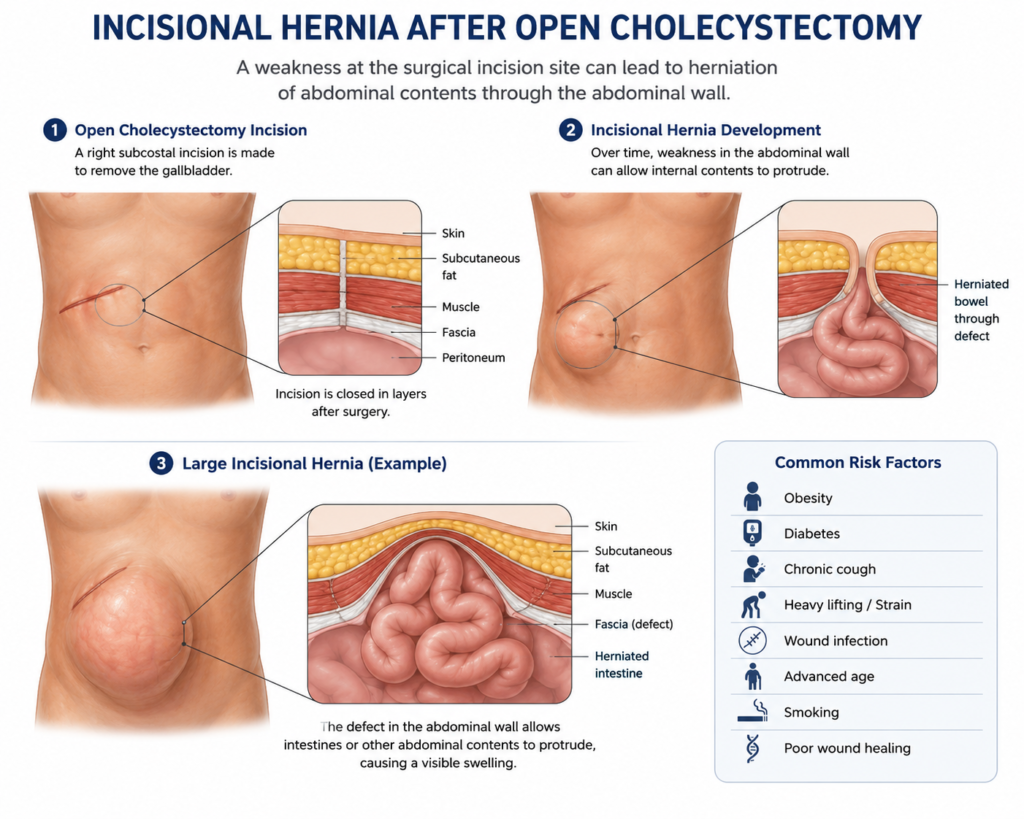
Gallbladder removal surgery, also known as cholecystectomy, is one of the most commonly performed abdominal operations. While most patients recover uneventfully, some may develop a complication known as an incisional hernia, where abdominal contents protrude through a weakness in the surgical scar.
An incisional hernia can occur after an open cholecystectomy, particularly when multiple patient-related and surgical factors combine to impair wound healing.
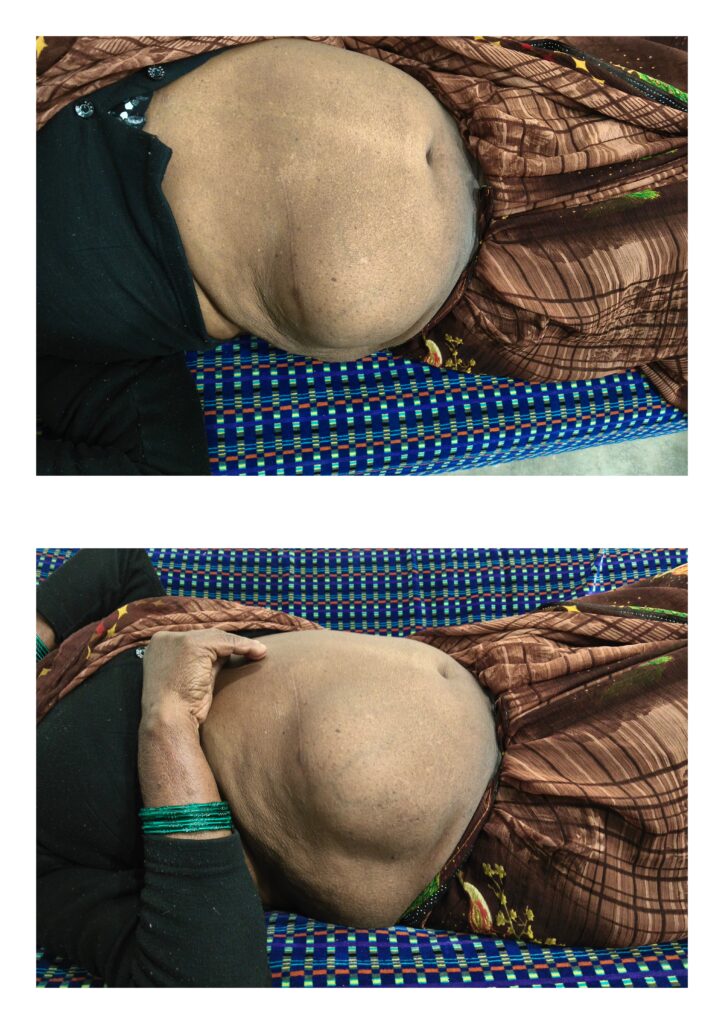
A 55-year-old obese female presented to Dr. Vivek Bhaskar with a very large incisional hernia that had developed years after an open gallbladder (cholecystectomy) surgery.
Incisional hernias can occur when the abdominal wall becomes weak at the site of a previous surgical incision.
Factors such as obesity, wound infection, diabetes, poor healing, chronic cough, and increased abdominal pressure can contribute to their development and gradual enlargement.
In this patient, the hernia had become exceptionally large, making the repair technically challenging. Such cases often involve stretched abdominal muscles, adhesions, and a significant defect in the abdominal wall.
Accepting the challenge, Dr. Vivek Bhaskar carefully planned and performed a complex hernia repair. Through meticulous surgical technique and attention to detail, the abdominal wall was successfully reconstructed and strengthened.
The patient recovered well and was relieved to regain comfort, confidence, and the ability to carry out daily activities without the burden of a large hernia.Today, she remains grateful for the successful treatment and the care she received.Large incisional hernias can be difficult to manage, but with proper surgical expertise, even complex cases can often be repaired successfully.
Frequently Asked Questions (FAQs)
Q1. What is an incisional hernia?
An incisional hernia is a bulge that develops through a weakness in the abdominal wall at the site of a previous surgical incision. It may appear months or even years after surgery.
Q2. Can an open gallbladder surgery cause an incisional hernia?
Yes. Although uncommon, an incisional hernia can develop after an open cholecystectomy, especially in patients with risk factors such as obesity, diabetes, wound infection, chronic cough, or poor wound healing.
Q3. What are the symptoms of a large incisional hernia?
Patients may notice a swelling at the site of the old surgical scar, discomfort, pain, a feeling of heaviness, difficulty performing daily activities, or enlargement of the bulge over time.
Q4. Is surgery necessary for an incisional hernia?
Most incisional hernias do not heal on their own. Surgery is usually recommended, especially when the hernia is large, symptomatic, progressively increasing in size, or at risk of complications such as bowel obstruction.
Q5. Can very large incisional hernias be repaired successfully?
Yes. Even complex and large incisional hernias can often be repaired successfully with proper preoperative planning and advanced surgical techniques. Experienced surgeons can reconstruct the abdominal wall and help patients return to a more comfortable and active life.