
FAKE DOCTORS: A SILENT THREAT TO PUBLIC HEALTH
━━━━━━━━━━━━━━━━━━
Introduction
Healthcare is one of the most essential services for any society. People trust doctors with their lives, believing they possess the knowledge and training needed to diagnose and treat illnesses. Unfortunately, this trust is often exploited by fake doctors, commonly known as quacks, who practice medicine without proper qualifications or legal authorization.
The presence of fake doctors has become a serious public health concern across India, especially in rural and underserved regions. Their actions not only endanger patients but also undermine confidence in the healthcare system.
What Are Fake Doctors?
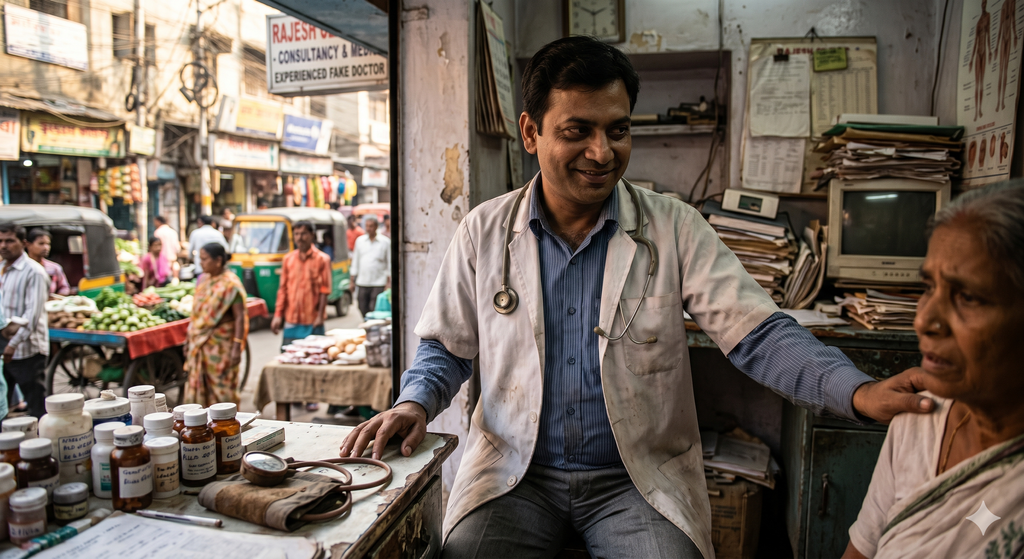
Fake doctors are individuals who practice medicine without possessing recognized medical degrees, valid licenses, or registration from authorized medical councils. They often present themselves as qualified healthcare providers and offer treatments that they are neither trained nor legally permitted to provide.
These unauthorized practitioners frequently establish small clinics in areas where access to qualified medical professionals is limited.
Why Are People Falling Victim to Quacks?
Several factors contribute to the continued presence of fake doctors in India:
Limited Access to Healthcare
- Shortage of qualified doctors in rural areas
- Lack of nearby hospitals and healthcare centers
- Poor transportation facilities
Financial Constraints
- Lower consultation fees compared to registered doctors
- Immediate availability of treatment
- Perception of affordable healthcare
Lack of Awareness
- Many patients do not know how to verify a doctor’s credentials
- People often trust local recommendations without checking qualifications
The Situation in Jharkhand
Jharkhand is among the states significantly affected by the problem of fake medical practitioners.
In remote and tribal regions of districts such as:
- Ramgarh
- Hazaribagh
- Ranchi
unauthorized practitioners often operate openly, providing medical services without the required education or registration.
Common Dangerous Practices
These individuals may:
- Prescribe powerful antibiotics without proper diagnosis
- Administer incorrect dosages of medicines
- Give unnecessary injections
- Perform minor surgical procedures in unhygienic conditions
- Delay referral of serious cases to hospitals
Such practices can lead to severe health complications and, in some cases, preventable loss of life.
Risks Associated With Treatment by Fake Doctors
Seeking treatment from unqualified practitioners can have serious consequences:
Health Risks
- Incorrect diagnosis of diseases
- Delayed treatment of serious illnesses
- Drug reactions and side effects
- Antibiotic resistance due to misuse of medicines
Safety Risks
- Use of unsterile instruments
- Poor infection control measures
- Unsafe medical procedures
Financial and Emotional Burden
- Increased medical expenses due to complications
- Prolonged illness and suffering
- Loss of trust in healthcare services
Government Action Against Illegal Medical Practice
Health departments and law enforcement agencies regularly conduct:
- Inspections of suspicious clinics
- Raids on illegal medical establishments
- Closure of unauthorized healthcare facilities
- Legal action against offenders
However, the problem continues because many rural communities still lack access to qualified healthcare professionals.
How Can People Protect Themselves?
Every citizen can play a role in reducing the threat posed by fake doctors.
Before Taking Treatment
✔ Ask for the doctor’s qualifications.
✔ Verify the registration number with the relevant medical council.
✔ Prefer treatment from registered hospitals and clinics.
✔ Seek a second opinion for serious illnesses.
✔ Report suspicious medical practitioners to health authorities.
What Needs to Be Done?
To eliminate the menace of fake doctors, a multi-pronged approach is required:
Strengthen Legal Enforcement
- Stricter penalties for illegal medical practice
- Faster prosecution of offenders
Improve Rural Healthcare
- Increase deployment of qualified doctors in underserved areas
- Strengthen primary health centers
Public Awareness Campaigns
- Educate citizens about verifying medical credentials
- Promote awareness through schools, media, and community programs
Frequently Asked Questions (FAQs)
1. How can I verify whether a doctor is genuine?
You can ask for the doctor’s registration number and verify it through the appropriate State Medical Council or the National Medical Commission (NMC).
2. Are all small clinics run by fake doctors?
No. Many qualified doctors run small clinics. The key is to verify the doctor’s qualifications and registration.
3. Why are fake doctors common in rural areas?
They often fill the gap created by shortages of qualified healthcare professionals and limited access to medical facilities.
4. Can fake doctors be punished under the law?
Yes. Practicing medicine without proper qualifications and registration is illegal and can attract legal action.
5. What should I do if I suspect someone is a fake doctor?
You should report the matter to local health authorities, district administration, or the police.
Conclusion
The menace of fake doctors represents a serious threat to public health in India. While the problem is particularly visible in rural and underserved regions such as parts of Jharkhand, its impact extends across the country. Protecting patients requires stronger enforcement, improved healthcare access, and widespread public awareness. By verifying medical credentials and choosing qualified healthcare providers, citizens can help combat this dangerous practice and safeguard lives.