
Dr Vivek Bhaskar,MBBS, MS, Laparoscopic Surgeon, Hazaribagh, Jharkhand
GALLSTONES & GALLBLADDER DISEASE
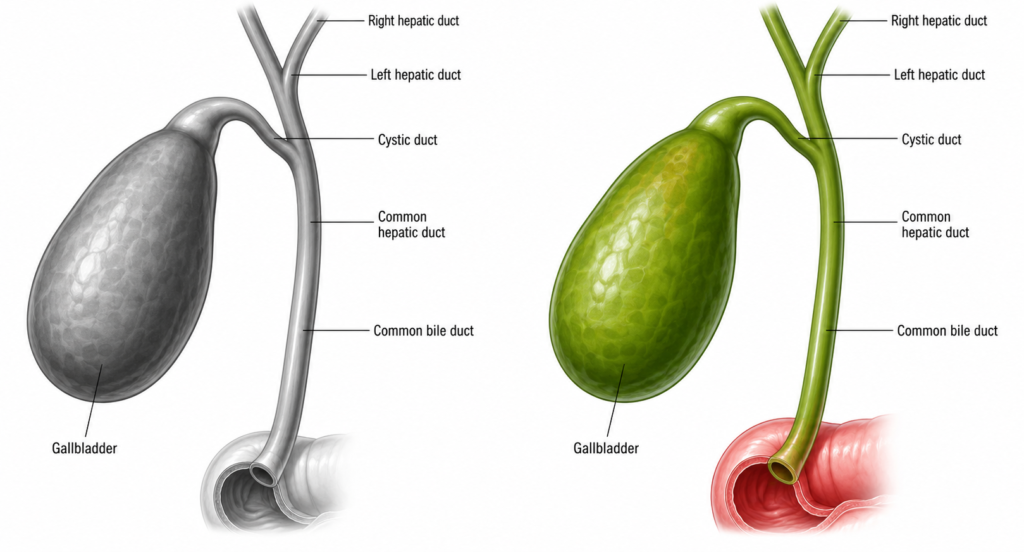
What Is It? The gallbladder is a small organ under your liver that stores bile — a fluid that helps digest fat. Sometimes, hard deposits called gallstones form inside it. These stones can be as tiny as a grain of sand or as large as a golf ball. When they block bile flow, they cause pain and infection.
Symptoms
- Sharp pain in the upper right side of the abdomen, especially after eating oily or fatty food
- Nausea, vomiting, and bloating
- Pain that radiates to the back or right shoulder
- Yellowish tint to the skin or eyes (jaundice)
- Fever with chills (sign of infection)
When to See a Surgeon You should consult Dr. Bhaskar immediately if:
- The pain is severe and does not go away within a few hours
- You have repeated episodes of pain after meals
- You notice yellowing of skin or eyes
- You develop high fever with abdominal pain
Dr. Bhaskar’s Approach Dr. Vivek Bhaskar performs Laparoscopic Cholecystectomy — a minimally invasive surgery to remove the gallbladder through tiny keyhole incisions. This modern technique means less pain, minimal blood loss, no large scar, and a much faster return to normal life. His calm, reassuring approach helps patients feel confident and at ease before, during, and after the procedure.
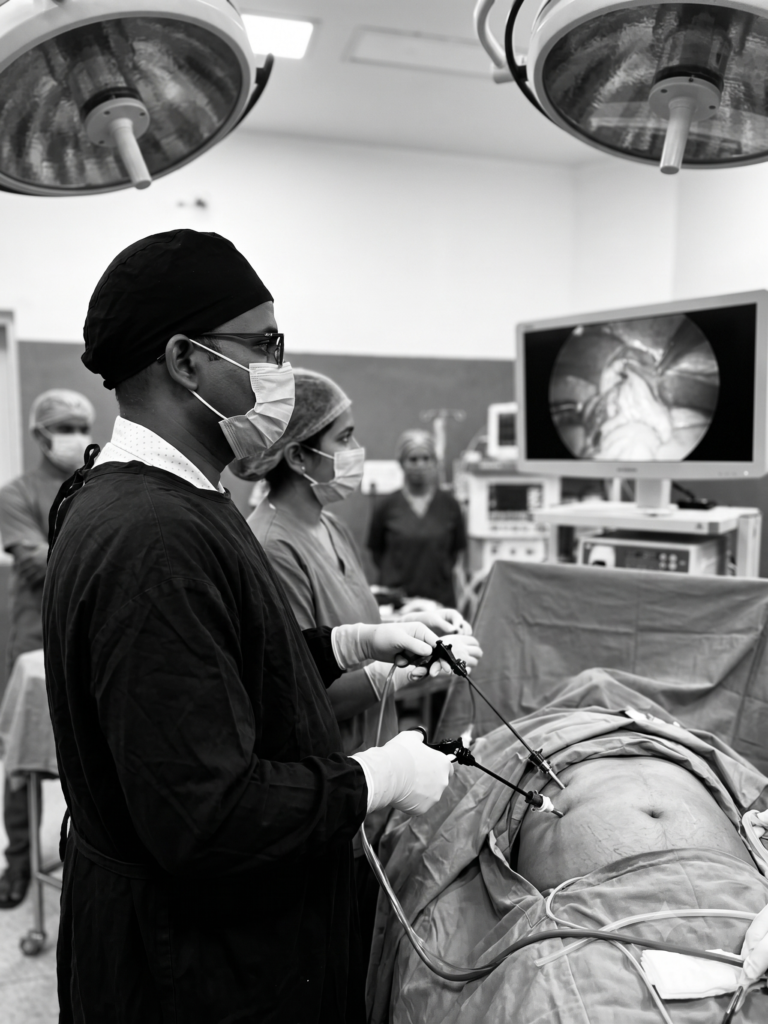
Recovery Time
- Hospital stay: 1–2 days
- Return to daily routine: within 5–7 days
- Full recovery: 2 weeks
👉 Don’t wait — early treatment leads to faster recovery. Contact Dr. Vivek Bhaskar today! 📞 Call / WhatsApp: +91-8521044949
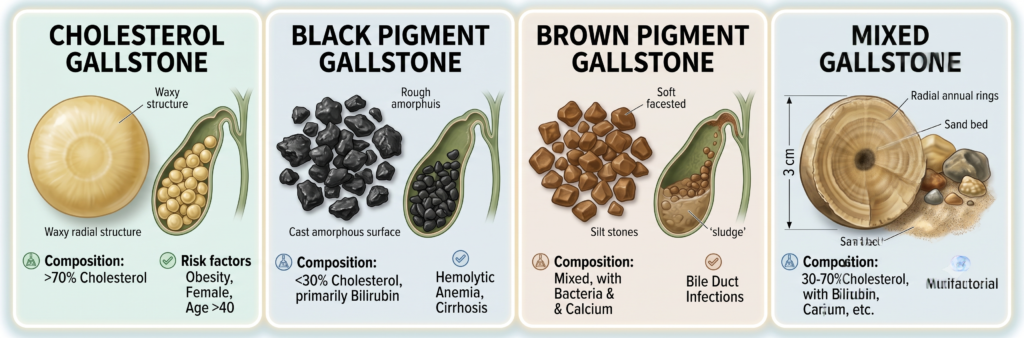
Image: Types Of Gallstones
FAQ — Gallbladder Stone Surgery Dr. Vivek Bhaskar | Hazaribagh, Jharkhand
Q1. What is gallbladder stone surgery? Gallbladder stone surgery is the removal of the gallbladder along with the stones inside it. The most common and modern method is Laparoscopic Cholecystectomy — a keyhole surgery done through 3–4 tiny cuts on the abdomen. It is safe, effective, and the only permanent cure for gallstones.
Q2. Is it necessary to remove the entire gallbladder, or just the stones? Only removing the stones is not a long-term solution — stones tend to form again. Removing the entire gallbladder is the standard and safest treatment. The good news is that you can live a completely normal, healthy life without a gallbladder.
Q3. Can I avoid surgery and treat gallstones with medicines? Medicines can temporarily reduce symptoms but cannot dissolve or permanently remove gallstones. If left untreated, stones can cause serious complications like infection, jaundice, or pancreatitis. Surgery is the only reliable and permanent cure.
Q4. Is laparoscopic surgery safe? Will there be a big scar? Yes, laparoscopic surgery is very safe and is the gold standard worldwide. It involves only 3–4 tiny cuts (less than 1 cm each), so scarring is minimal and barely visible. Most patients are surprised at how quick and comfortable the recovery is.
Q5. Will I need general anaesthesia? Is that risky? Yes, the surgery is done under general anaesthesia — meaning you will be completely asleep and feel no pain. The anaesthesia is administered by a qualified anaesthetist and is very safe for most patients. Dr. Bhaskar’s team will assess your fitness before the procedure.
Q6. How long does the surgery take? The laparoscopic procedure typically takes 30 to 60 minutes. You will be in the recovery room for a couple of hours after that before being shifted to the ward.
Q7. How many days will I need to stay in the hospital? Most patients go home within 1 to 2 days after laparoscopic surgery. In some cases, patients are discharged the same day. Open surgery (if required) may need a longer stay of 3 to 5 days.
Q8. How soon can I return to normal routine and work? Most patients return to light daily activities within 5 to 7 days. Office-going patients can usually resume work within a week. Those with physical or labour-intensive work may need 2 to 3 weeks of rest.
Q9. What can I eat after gallbladder surgery? For the first few weeks, it is best to avoid very oily, fatty, or spicy food. Stick to light, easily digestible meals — rice, dal, vegetables, and fruits. Most people can return to a normal diet within 4 to 6 weeks. The body adjusts to functioning without a gallbladder quite naturally.
Q10. What happens if I do not get the surgery done? Untreated gallstones can lead to serious complications including acute cholecystitis (severe infection of the gallbladder), jaundice, bile duct blockage, pancreatitis, and in rare cases, gallbladder cancer. Early surgery prevents all these risks.
Q11. I have diabetes / blood pressure / heart condition — can I still have surgery? Yes, in most cases patients with controlled diabetes, blood pressure, or heart conditions can safely undergo laparoscopic surgery. Dr. Bhaskar will review your medical history and coordinate with relevant specialists to ensure you are fully prepared and safe for the procedure.
Q12. Is there any chance the surgery will need to be converted to open surgery? In a small number of cases — usually when there is severe inflammation or complex anatomy — the surgeon may decide mid-procedure to switch to open surgery for safety. Dr. Bhaskar will always explain this possibility beforehand and will make the decision that is safest for you.
Q13. Will I have pain after the surgery? Mild discomfort and bloating are normal for 2 to 3 days after laparoscopic surgery. Pain is well controlled with prescribed medicines. Most patients are surprised by how manageable the post-operative discomfort is compared to what they expected.
Q14. People from which areas does Dr. Bhaskar treat? Dr. Vivek Bhaskar regularly treats patients from Hazaribagh and surrounding areas including Barhi, Barkattha, Vishnugarh, Barkagaon, Chouparan, Ramgarh, Chatra, Simaria, and beyond. Patients travel from across the region specifically for his surgical expertise and compassionate care.
Q15. How do I book an appointment with Dr. Vivek Bhaskar? You can call or WhatsApp directly on +91-8521044949 to book a consultation. Early evaluation is always recommended — do not wait for symptoms to worsen.