
How Exercise And Walking Reduce Cancer Risk

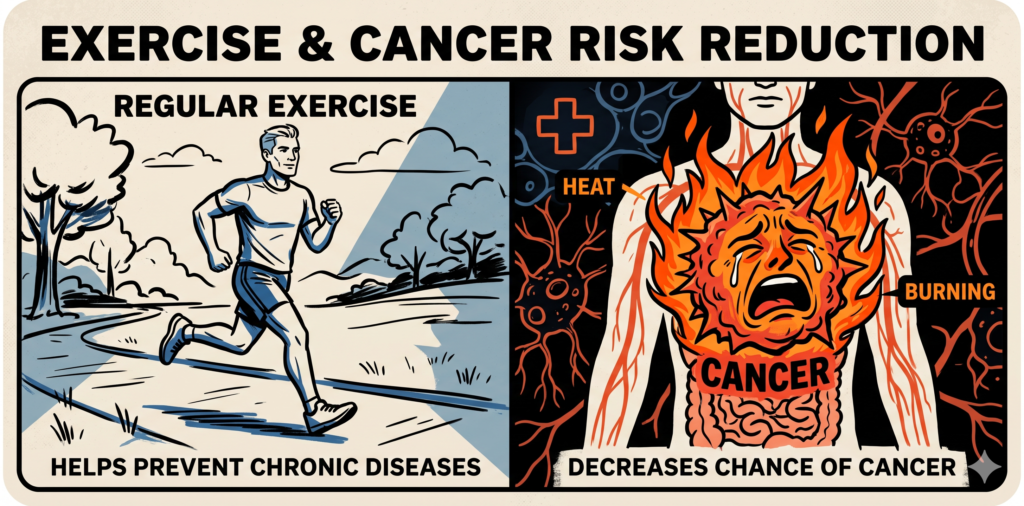
Regular physical activity — including brisk walking — is one of the most effective, low-cost ways to lower the risk of several common cancers. Evidence from large population studies and cancer organizations shows that staying active reduces the chance of developing cancers such as breast, colorectal, and endometrial, and may help lower risk for others. Here’s how exercise works and simple ways to add it into daily life.
Why exercise helps prevent cancer
- Lowers chronic inflammation: Physical activity reduces systemic inflammation, a driver of DNA damage and tumor-promoting environments.
- Improves insulin sensitivity: Exercise decreases insulin resistance and circulating insulin and insulin-like growth factors, cutting growth signals that many tumors use.
- Regulates sex hormones: Activity can reduce circulating estrogen and other hormones linked to breast and endometrial cancer risk.
- Boosts immune surveillance: Regular moderate exercise enhances immune function, improving detection and elimination of abnormal cells.
- Promotes healthy body weight: Obesity raises the risk of multiple cancers; exercise helps burn calories, preserve muscle, and reduce adipose-related cancer-promoting factors.
- Improves gut health and transit: Movement speeds bowel transit time and favorably influences gut microbiota, reducing colorectal cancer risk.
What the studies show
- Strongest evidence: Breast and colorectal cancers consistently show risk reductions (often 10–20% or more) among people meeting recommended activity levels.
- Dose response: More activity gives more benefit. Transitioning from sedentary to moderately active yields substantial gains; increasing beyond baseline continues to lower risk.
- Survivors: Exercise after a cancer diagnosis is linked with better outcomes, reduced recurrence risk in some cancers, and improved quality of life.
- Other cancers: Associations for lung, prostate, and pancreatic cancers are less consistent but suggest possible modest benefits, particularly when exercise prevents obesity and improves overall health.
How much activity is recommended
- Minimum: Aim for at least 150 minutes per week of moderate-intensity activity (for example, brisk walking), or 75 minutes of vigorous activity.
- Greater benefit: 200–300 minutes per week provides larger protective effects.
- Strength training: Include muscle-strengthening activities two days per week to support metabolic health and body composition.
Practical walking-and-exercise tips
- Start where you are: Begin with 10–15 minutes daily if needed, and increase by 5–10 minutes each week.
- Make it brisk: Walk at a pace that raises your heart rate and makes talking slightly challenging.
- Use intervals: Add short faster-pace bursts to boost intensity without extra time.
- Break up sitting: Stand or walk for 5–10 minutes every hour to reduce sedentary harm.
- Add hills or stairs: These increase muscle work and intensity with minimal equipment.
- Combine habits: Walk after meals to help glucose control, and pair walks with social time to improve adherence.
- Track progress: Use a pedometer or smartphone app; target roughly 7,000–10,000 steps/day where appropriate.
- Tailor for patients: Older, frail, or post-treatment individuals should use supervised, graded programs and balance exercises.
Notes for clinicians and patients
- Safety first: Screen for major cardiovascular or orthopedic issues before starting vigorous programs; adapt intensity for comorbid conditions.
- Individualize plans: Advise cancer survivors to follow oncology-specific guidance and personalize programs during and after treatment.
- Encourage consistency: Small, regular increases in activity produce meaningful long-term cancer risk reductions.
Conclusion
Exercise — especially regular walking — reduces cancer risk through multiple biological pathways: lowering inflammation, improving metabolism and hormone profiles, boosting immunity, and preventing obesity. Encourage patients and website visitors to adopt sustainable, regular activity habits: consistent small steps lead to significant long-term benefits.
References
- McTiernan A, Friedenreich CM, Katzmarzyk PT, et al. Physical Activity in Cancer Prevention and Survival: A Systematic Review. Med Sci Sports Exerc. 2019;51(6):1252-1261. This review found strong evidence that physical activity lowers risk for several cancers, including breast, colon, and endometrial cancers.pmc.ncbi.nlm.nih
- World Cancer Research Fund. Brisk walking lowers the risk of 5 cancers. Published 2025. This report states that brisk walking was linked with lower risk of anal, liver, small intestine, thyroid, and lung cancers.pressroom.cancer+1
- National Cancer Institute. Physical activity can lower risk of 13 types of cancer. Published 2016. The NCI summary reports that greater leisure-time physical activity was linked to a lower risk of 13 different cancers.cancer
- American Cancer Society. How Exercise Can Lower Cancer Risk. The ACS notes that regular exercise is associated with lower risk of several cancers, including breast, prostate, colon, and endometrial cancers.cancer
- World Health Organization. Physical activity fact sheet. The WHO states that insufficient physical activity is a key risk factor for noncommunicable diseases, including cancer.who