
Breast Lump Surgery in Hazaribagh
Dr. Vivek Bhaskar | MS (Surgery) | Hazaribagh, Jharkhand
Do Not Ignore a Lump — Ever
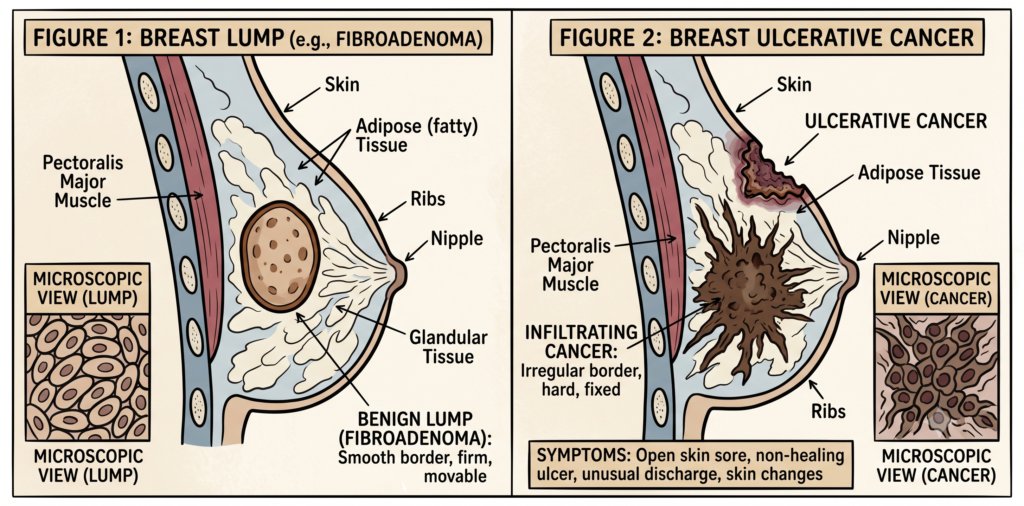
Finding a lump in the breast is one of the most frightening experiences for any woman. The mind immediately jumps to the worst possibility — cancer. But here is the truth that every woman in our region must know — most breast lumps are not cancer. The majority are benign (non-cancerous) conditions that are completely treatable.
However — and this is equally important — every breast lump must be examined by a qualified surgeon without delay. Only a proper clinical examination and the right investigations can tell you exactly what a lump is. Waiting, worrying silently at home, or relying on guesswork is never the right approach.
Dr. Vivek Bhaskar provides expert, sensitive, and completely confidential evaluation and surgical treatment of breast lumps right here in Hazaribagh — so women across this region no longer need to travel to distant cities for proper care.
What is a Breast Lump?
A breast lump is any abnormal mass, thickening, or swelling felt in the breast tissue. Breasts naturally have a slightly uneven, lumpy texture — especially in younger women — so not every irregularity is a cause for alarm. But any new lump, a lump that has changed in size or shape, or one that feels different from the surrounding tissue must be properly evaluated.
What Causes Breast Lumps?
There are several possible causes, most of which are benign:
Fibroadenoma
The most common breast lump in young women between 15 and 35 years. It is a firm, smooth, rubbery lump that moves easily under the skin. It is completely non-cancerous. Small fibroadenomas may be monitored; larger or growing ones are surgically removed.
Breast Cyst
A fluid-filled sac inside the breast. Common in women between 35 and 50 years. Usually feels smooth and slightly tender. Can be confirmed by ultrasound and treated by aspiration (draining the fluid) or surgery.
Fibrocystic Breast Disease
A condition where the breast tissue feels lumpy or rope-like, often becoming more prominent before menstruation. Very common, non-cancerous, and usually managed with lifestyle changes and medicine.
Breast Abscess
A painful, tender, warm swelling caused by infection, most commonly in breastfeeding women. Requires drainage and antibiotics, sometimes minor surgery.
Lipoma
A soft, painless, slow-growing lump made of fatty tissue. Non-cancerous and usually removed only if it grows or causes discomfort.
Breast Cancer
Less common but critically important to detect early. Typically presents as a hard, irregular, painless lump — sometimes with associated skin changes, nipple changes, or enlarged lymph nodes under the arm. Early detection dramatically improves treatment outcomes.
Warning Signs — When to See a Surgeon Immediately
See Dr. Vivek Bhaskar without delay if you notice:
- Any new lump in the breast — no matter how small
- A lump that has grown or changed in shape or firmness
- Skin changes over the breast — dimpling, puckering, redness, or orange-peel texture
- Nipple discharge — especially if it is blood-stained or spontaneous
- Nipple pulling inward or change in nipple direction
- Persistent pain or tenderness in one specific area of the breast
- Swelling or a lump in the armpit area
- Any change in the size or shape of the breast
- A family history of breast cancer — regular screening is especially important
Early Detection Saves Lives
This cannot be said strongly enough. Breast cancer detected early — at Stage 1 or Stage 2 — has a survival rate of over 90%. Breast cancer detected late — at Stage 3 or Stage 4 — is far harder to treat with significantly poorer outcomes.
In our region, many women present to surgeons only when the lump has become very large or when other symptoms like pain, skin changes, or nipple discharge have developed. This delay costs precious time and treatment options.
Women must overcome hesitation, fear, and social barriers to get themselves examined early. A five-minute examination by Dr. Bhaskar can make the difference between a simple surgery and a complicated, prolonged treatment journey.
How is a Breast Lump Diagnosed?
Dr. Bhaskar follows a thorough, step-by-step evaluation:
Clinical Breast Examination
A careful, professional physical examination of both breasts and the armpit area to assess the nature, size, and characteristics of the lump. This is the essential first step.
Ultrasound of the Breast
The most commonly used initial imaging test — especially for younger women. Distinguishes between solid lumps and fluid-filled cysts. Widely available in Hazaribagh.
Mammography
An X-ray of the breast tissue. Recommended for women above 40 years and for screening. Can detect very small or early changes not felt by hand.
FNAC (Fine Needle Aspiration Cytology)
A simple, quick, minimally uncomfortable procedure where a thin needle is used to withdraw a small sample of cells from the lump. The sample is examined under a microscope to determine if cells are normal, benign, or cancerous.
Core Needle Biopsy
A slightly larger sample of tissue is taken using a special needle under local anaesthesia. Gives a more detailed, definitive diagnosis when FNAC results are inconclusive.
Contrast-Enhanced Mammography / MRI Breast
In selected complex or high-risk cases, advanced imaging may be advised for a more complete picture.
Treatment — What Are the Options?
Treatment depends entirely on the type, size, and nature of the lump. Dr. Bhaskar tailors every treatment plan to the individual patient.
Monitoring (No Immediate Surgery)
Small, clearly benign lumps like tiny fibroadenomas that are stable may be safely monitored with regular clinical examination and ultrasound rather than immediate surgery.
Aspiration
Breast cysts can often be treated by simply draining the fluid with a fine needle — a quick clinic procedure requiring no admission.
Lumpectomy (Surgical Removal of the Lump)
The most common surgical procedure. The lump is removed along with a small margin of surrounding normal tissue. The rest of the breast is completely preserved. Performed under general anaesthesia. Most patients go home within 1 to 2 days.
Wide Local Excision
A slightly wider removal of tissue around the lump. Done when the margins need to be wider for safety — particularly for borderline or early malignant lesions.
Mastectomy
Removal of the entire breast — performed when cancer has spread significantly within breast tissue. Today, breast-conserving surgery (lumpectomy plus radiation) is preferred wherever possible, preserving the breast while effectively treating cancer.
Sentinel Lymph Node Biopsy
In cases of confirmed breast cancer, the nearby lymph nodes in the armpit are checked during surgery to see if cancer has spread — guiding further treatment decisions.
Dr. Bhaskar’s Approach to Breast Surgery
Breast surgery — more than almost any other surgical procedure — requires not just technical skill but extraordinary sensitivity, empathy, and communication. Dr. Vivek Bhaskar is deeply aware of the emotional weight that comes with a breast lump diagnosis.
Every patient is given:
- Unhurried time to ask questions and understand their condition fully
- A clear, honest explanation of the diagnosis and all treatment options
- Complete privacy and confidentiality throughout
- Emotional reassurance at every step of the journey
- Personalised surgical planning based on the patient’s specific situation
No patient leaves Dr. Bhaskar’s consultation without understanding exactly what is happening and what the next step is.
Recovery After Breast Lump Surgery
Recovery depends on the type of procedure performed:
After Lumpectomy or Minor Procedure:
- Hospital stay: Same day or 1 night
- Rest at home: 3 to 5 days
- Return to light activities: within 1 week
- Return to work: within 7 to 10 days
- Avoid heavy lifting: for 3 to 4 weeks
- Stitches removed: within 7 to 10 days
After Larger Procedures (Wide Excision / Mastectomy):
- Hospital stay: 2 to 4 days
- Rest at home: 1 to 2 weeks
- Return to light activities: 2 weeks
- Full recovery: 4 to 6 weeks
- Follow-up with oncologist if required for further treatment planning
Mild swelling, bruising, and discomfort around the surgical site is normal and well managed with prescribed medicines.
Breast Health Awareness for Women in Our Region
Women in Hazaribagh and surrounding areas of Jharkhand often face multiple barriers to seeking breast health care — social hesitation, lack of awareness, distance from medical facilities, and in some cases family or cultural pressure to ignore symptoms.
Dr. Bhaskar is committed to bridging this gap. Every woman deserves timely, expert, and compassionate surgical care — regardless of where she lives. Whether you are from Hazaribagh, Barhi, Barkattha, Vishnugarh, Barkagaon, Chouparan, Ramgarh, Chatra, or Simaria — expert breast surgery is now available close to home.
Every woman should know:
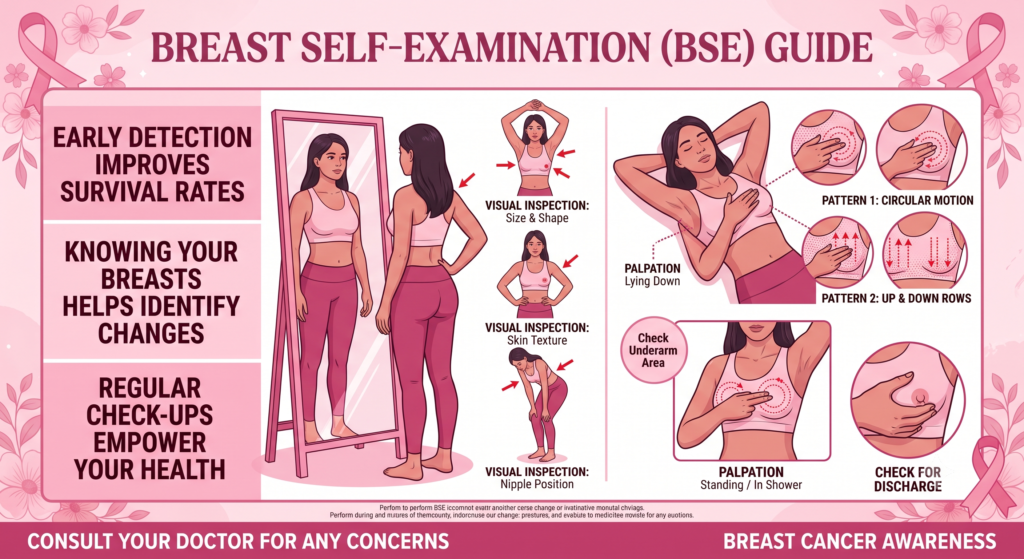
- How to perform a simple monthly self-breast examination
- That any new lump must be seen by a surgeon promptly
- That early-stage breast cancer is highly curable
- That most lumps are NOT cancer — but all need evaluation
Self-Examination — How to Check Your Own Breasts
Every woman above the age of 20 should perform a self-breast examination once a month, ideally a week after her period ends.
How to do it:
- Stand in front of a mirror with arms at your sides — look for any visible changes in shape, size, or skin
- Raise both arms and check again
- Lie down flat and use the flat of your fingers to gently feel the entire breast and armpit area in small circular motions
- Check for any lumps, thickening, or changes
- Gently squeeze the nipple and check for any discharge
If you feel anything unusual — see Dr. Bhaskar. Do not wait.
Why Patients Trust Dr. Vivek Bhaskar
Women across Hazaribagh and the wider region trust Dr. Bhaskar for breast lump evaluation and surgery because of three qualities that define his practice — surgical expertise, genuine empathy, and absolute confidentiality.
He has helped hundreds of women navigate the anxiety of a breast lump diagnosis — reassuring those with benign conditions and providing timely, skilled surgical care to those who need it. Many of these women have come from Barhi, Barkattha, Vishnugarh, Barkagaon, Chouparan, Ramgarh, Chatra, Simaria, and other surrounding areas, choosing Dr. Bhaskar specifically for his reputation for sensitive, compassionate care.
Frequently Asked Questions (FAQ)
Q1. I found a lump in my breast. Should I panic?
No. Please do not panic — but do not ignore it either. The majority of breast lumps are benign and completely treatable. The most important thing is to see a surgeon promptly so the lump can be properly examined and investigated. Knowledge removes fear — and early evaluation gives you answers and peace of mind.
Q2. I am only 22 years old. Can young women get breast lumps?
Yes, absolutely. Breast lumps are in fact very common in young women. The most frequent cause in young women is fibroadenoma — a completely benign condition. Young women should never assume they are too young to get a breast lump checked.
Q3. The lump is small and painless. Do I still need to see a doctor?
Yes. In fact, painless lumps need more attention, not less. Many early breast cancers are completely painless. Size and pain level do not determine whether a lump is serious — only proper examination and investigation can.
Q4. Will I need to remove my entire breast?
Not necessarily. In most benign cases, only the lump is removed — the breast is fully preserved. Even in cases of breast cancer, modern breast-conserving surgery (lumpectomy) is preferred wherever possible. Dr. Bhaskar will discuss all options clearly and help you make the best decision for your situation.
Q5. Is the surgery very painful?
The surgery is performed under general anaesthesia — you will feel nothing during the procedure. Afterwards, there is mild soreness and swelling for a few days, which is well controlled with medicines. Most patients are surprised by how manageable the discomfort is.
Q6. How long will I be in the hospital?
For a straightforward lumpectomy, most patients go home the same day or after one night’s stay. Larger procedures may require 2 to 4 days. Dr. Bhaskar will guide you based on your specific surgery.
Q7. Can I breastfeed after breast lump surgery?
In most cases of lumpectomy, breastfeeding ability is preserved. Dr. Bhaskar takes care to minimise disruption to breast tissue and ducts during surgery. This is discussed and planned before the procedure for women of childbearing age.
Q8. I have a family history of breast cancer. What should I do?
A family history of breast cancer — especially in a mother, sister, or daughter — increases your risk and means you should start regular screening earlier than average. Please consult Dr. Bhaskar for personalised screening and monitoring guidance. Do not wait for a lump to appear.
Q9. Is there any non-surgical treatment for breast lumps?
It depends entirely on the type of lump. Simple cysts can be drained without surgery. Small stable fibroadenomas may just be monitored. However, growing lumps, suspicious lumps, and confirmed cancers require surgical treatment. Dr. Bhaskar will always recommend the least invasive option that is safe and effective for your specific condition.
Q10. I am worried about scars after surgery. Will they be very visible?
Dr. Bhaskar makes incisions carefully planned to be as small as possible and in locations that are least visible. Scars fade significantly over months and in most cases become barely noticeable. Your comfort and dignity are always a priority.
Q11. Will I need chemotherapy or radiation after surgery?
This depends on whether the lump is cancerous and what stage it is at. For benign lumps, no further treatment is needed after surgery. For cancer, Dr. Bhaskar coordinates with oncologists to plan any additional treatment required. Every case is different and will be discussed in full detail.
Q12. How do I reach Dr. Vivek Bhaskar for a breast lump consultation?
Simply call or WhatsApp on the number below to book a consultation. All appointments are completely private and confidential. There is no need to feel hesitant or embarrassed — Dr. Bhaskar’s practice is a safe, respectful, and judgement-free space for every woman.
Book Your Consultation Today
📞 Call / WhatsApp: +91-8521044949
📍 Dr. Vivek Bhaskar | MS (Surgery) | Hazaribagh, Jharkhand
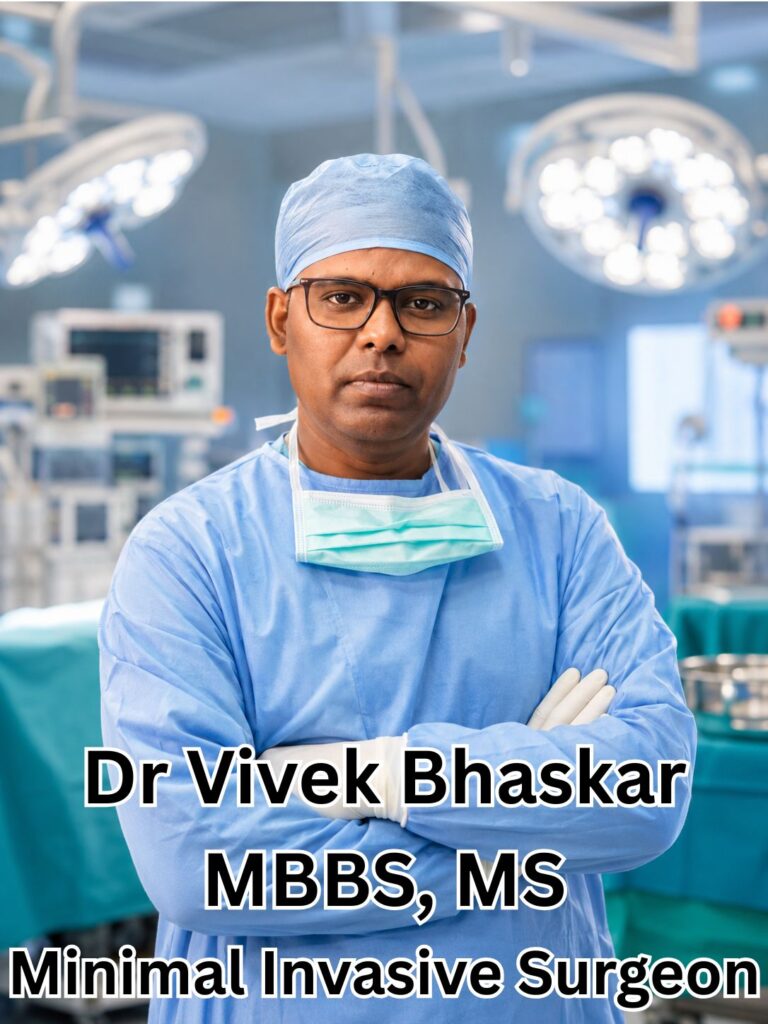
Serving patients from Hazaribagh, Barhi, Barkattha, Vishnugarh, Barkagaon, Chouparan, Ramgarh, Chatra, Simaria and surrounding areas of Jharkhand.
Your health. Your dignity. Your choice. Dr. Bhaskar is here to help — with expertise, empathy, and complete confidentiality.