PCOS vs PMOS Simplified: Understanding the New Name for Polycystic Ovary Syndrome
On May 12, 2026, a landmark global consensus published in The Lancet officially changed the name from Polycystic Ovary Syndrome (PCOS) to Polyendocrine Metabolic Ovarian Syndrome (PMOS).
For years, doctors called this condition Polycystic Ovary Syndrome (PCOS). But here’s the surprising part:
❗ Many people diagnosed with PCOS don’t actually have ovarian cysts, while some people with ovarian cysts don’t have the syndrome at all.
That’s why experts are increasingly discussing a new name:
🔄 PMOS = Polyendocrine Metabolic Ovarian Syndrome
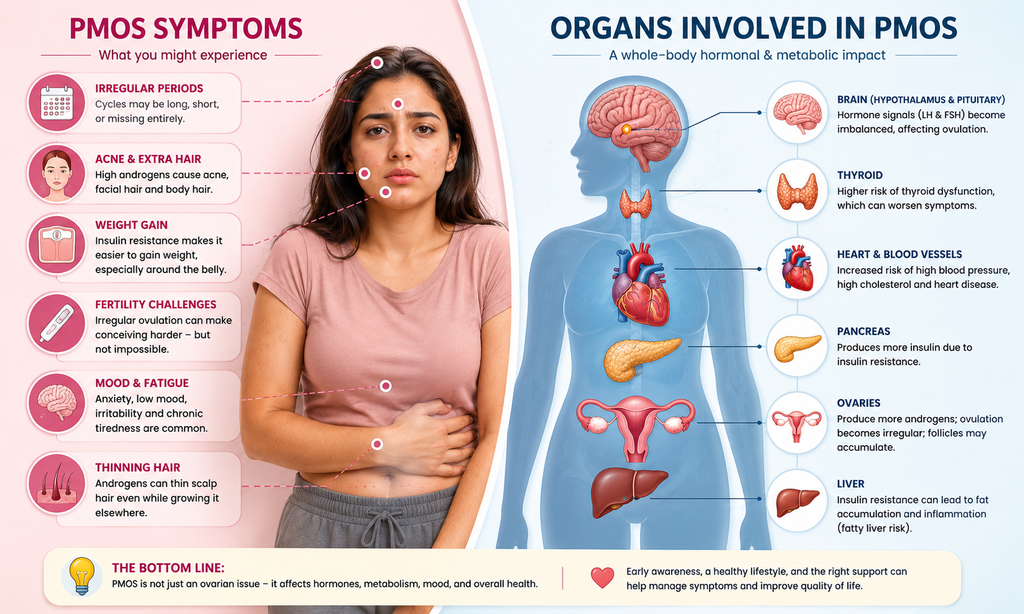
This name shifts the focus from the ovaries alone to the real underlying problem — a hormonal and metabolic imbalance affecting the entire body.
🏭 What’s Actually Happening Inside the Body?
Imagine your body as a factory.
Normally, every department works together smoothly:
🧠 Brain → 🥚 Ovaries → 🍬 Insulin → ⚖️ Hormones
In PMOS, the machinery becomes slightly out of sync.
Three major problems occur together:
          PMOS
            │
 ┌──────────┼──────────┐
 │          │          │
🍬 Insulin  ⚖️ Hormones 🧠 Signals
Resistance  Imbalance   Disturbed
1️⃣ Too Much Insulin 🍬
The body’s cells stop responding properly to insulin.
As a result:
⬆️ More insulin is produced
⬇️ Cells still don’t use sugar efficiently
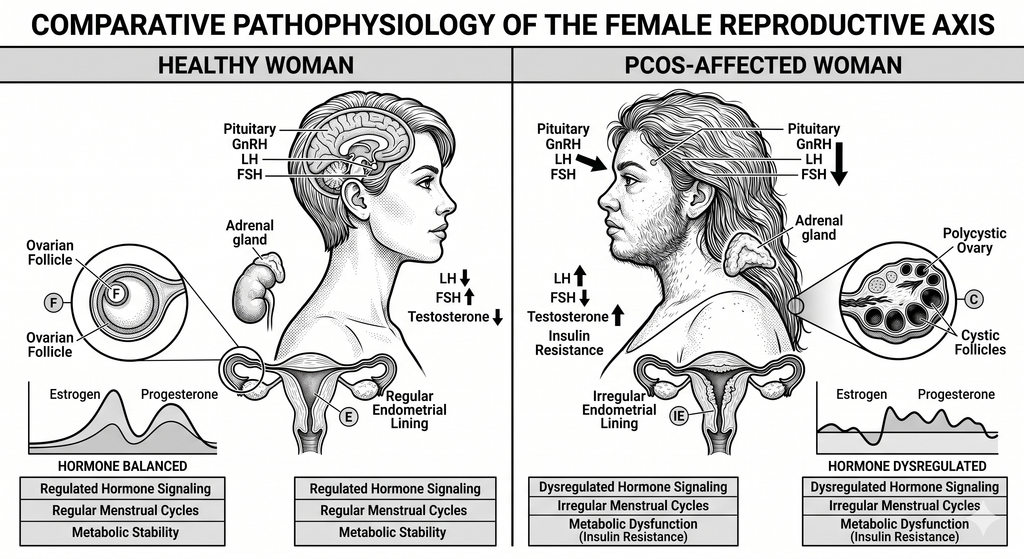
⬆️ Ovaries start producing more male hormones (androgens)
Chain Reaction
🍬 Insulin Resistance
↓
⬆️ Excess Insulin
↓
⬆️ Androgens
↓
⚠️ PMOS Symptoms
2️⃣ Hormone Imbalance ⚖️
Higher androgen levels disrupt the normal menstrual cycle.
Instead of releasing an egg every month:
🥚 Egg development begins
↓
🚫 Ovulation fails
↓
💧 Small follicles accumulate
↓
📷 “Cysts” seen on ultrasound
These are actually immature follicles rather than true cysts.
3️⃣ Brain Signals Go Haywire 🧠
The brain communicates with the ovaries using two important hormones:
📢 LH (Luteinizing Hormone)
📢 FSH (Follicle Stimulating Hormone)
In PMOS, the balance between these hormones gets disturbed.
Normal Cycle
LH ↔ FSH
   Balanced

PMOS
LH ↑↑
FSH ↓
   Imbalanced
Result?
❌ Irregular ovulation
❌ Missed periods
❌ Fertility problems
🔍 Common Symptoms
🩸 Irregular Periods
😊 Acne & Extra Hair
⚖️ Weight Gain
👶 Fertility Challenges
😴 Fatigue & Mood Changes
💇 Hair Thinning
🧩 Myth vs Fact
| ❌ Myth | ✅ Fact |
|---|---|
| You must have cysts to have PMOS | Many people have PMOS without visible cysts |
| Only overweight people get PMOS | PMOS affects people of all body sizes |
| PMOS means infertility | Many people successfully become pregnant |
| It disappears after menopause | Metabolic risks often continue throughout life |
📊 The PMOS Cycle
🍬 Insulin Resistance
          ↓
⬆️ Excess Insulin
          ↓
⬆️ Androgens
          ↓
🚫 Irregular Ovulation
          ↓
⚖️ Hormonal Imbalance
          ↓
⬆️ Weight Gain
          ↓
More Insulin Resistance
          ↺
Breaking this cycle is the goal of treatment.
🌟 Management: It Is Very Doable
🥗 Diet & Lifestyle
The foundation of treatment.
✅ Low-glycaemic foods
✅ More vegetables
✅ Adequate protein
✅ Regular exercise
✅ Good sleep
Even a 5–10% weight reduction can significantly improve symptoms.
💊 Medication
Depending on individual needs:
✔ Metformin (improves insulin sensitivity)
✔ Hormonal contraceptive pills
✔ Anti-androgen medicines
✔ Other tailored treatments
👶 Fertility Support
If pregnancy is desired:
🌱 Ovulation induction
🩺 Fertility monitoring
🧪 IVF when needed
Modern fertility treatments have excellent success rates.
🧠 Mental Health Matters Too
PMOS is not “just a hormone problem.”
Support can include:
💬 Counselling
🧘 Stress management
📚 Education
🤝 Support groups
🧠 Cognitive Behavioural Therapy (CBT)
❤️ Final Message
PMOS is not simply an ovarian condition.
It is a whole-body metabolic and hormonal syndrome that affects reproduction, metabolism, skin, mood, and long-term health.
The good news?
✨ It is manageable.
✨ Symptoms can improve significantly.
✨ Fertility can often be restored.
✨ With the right support, people with PMOS can live healthy and fulfilling lives.
Understanding the condition is the first step toward taking control of it.